



Highly Customizable
The enzymatic process enables tailored polymer properties, which can then be further modified with a variety of functional groups– expanding the material design space to be even more flexible.
These are challenging times—but also exciting ones. Every day we’re told we are closer to environmental disaster. But every day also brings new innovation. Scientific discovery. And an opportunity to change the course.
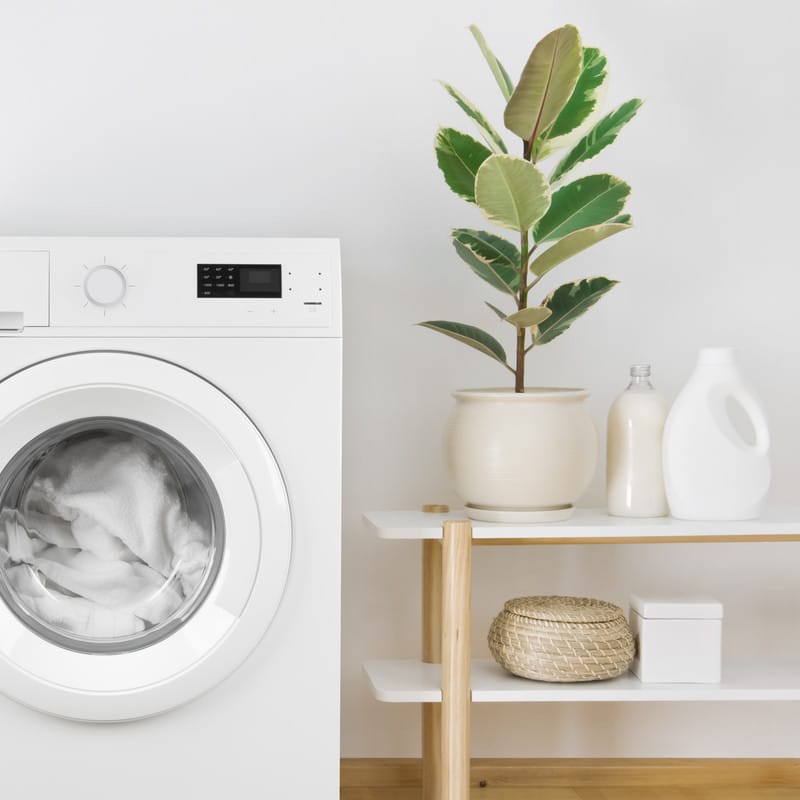
In markets like home and personal care, cleaning and efficacy have taken on greater importance than ever before. While demand for more sustainable products continues to rise, consumers worry that “eco-friendly” often translates into products that aren’t as effective as traditional ones.
Yet we also know that when we combine nature’s resilience and adaptive powers with bioscience innovation, we can create novel solutions that change how people think and act. And we have.
Over the past decade, IFF Health & Biosciences has developed a technology platform called Designed Enzymatic Biomaterials™, or “DEB”. Leveraging deep expertise in biotech research, process development and product commercialization, we can now create polysaccharides from the enzymatic polymerization of simple sugars, which are highly-tailored for a range of applications in home and personal care—and beyond.
This means unique, structurally diverse polysaccharides like those traditionally found in nature can now become available with accuracy, consistency and at scale.
This is the future of biomaterials. This is DEB.
Unlike fossil-based synthetic polymers, the DEB process allows us to access unique, structurally-diverse polysaccharides—like those found in nature—at scale and under mild process conditions. This provides an unprecedented design space for enhanced performance. Using only plant-based sugars, water, and our favorite biocatalyst—the enzyme—we can now design functional, biobased, biodegradable materials without compromising performance.
The enzymatic process enables tailored polymer properties, which can then be further modified with a variety of functional groups– expanding the material design space to be even more flexible.
The precisely controlled enzymatic process ensures excellent structural uniformity for the DEB materials. This offers high reproducibility and little batch-to-batch variation.
Biodegradability is intrinsic to polysaccharide materials. Tailoring the molecular structure allows DEB to meet or exceed required product performance while still meeting biodegradability requirements across application areas.
Consumers today demand scientifically-backed claims to demonstrate sustainability, combined with robust, non-compromised performance in cleaning and hygiene.
| Synthetic, petroleum-based polymers | Designed Enzymatic Biomaterials by IFF | Polysaccharides extracted from plants | |
|---|---|---|---|
| Consistent quality | ✔ | ✔ | ✗ |
| Tailored performance | ✔ | ✔ | ✗ |
| High purity | ✔ | ✔ | ✗ |
| Scalable & reliable supply | ✔ | ✔ | ✗ |
| Renewable | ✗ | ✔ | ✔ |
| Biodegradable* | ✗ | ✔ | ✔ |
| Natural clean label | ✗ | ✔ | ✔ |
Just like a plant uses carbon dioxide, the sun, and nutrients from the soil to grow into a tree, DEB is a process that uses plant-based sugars and enzymes under mild process conditions to create bio-based materials — with the same or better efficiency, purity and material consistency as seen in traditional synthetic polymers, but starting from natural feedstocks.
DEB gives rise to a new class of alpha-glucan polysaccharides, from the enzymatic polymerization of glucose from plant-based sugar, that has high purity and consistent quality.
An extensive Life Cycle Assessment was performed and peer-reviewed following the ISO 14040 and ISO 14041 standards. The results of this LCA validate four key sustainability benefits that sit at the core of the DEB technology platform.
On a cradle-to-gate basis for manufacturing, the impact on climate change is lower than the carbon sequestration potential of the product; meaning, more CO2 is removed from the atmosphere than is emitted through production.
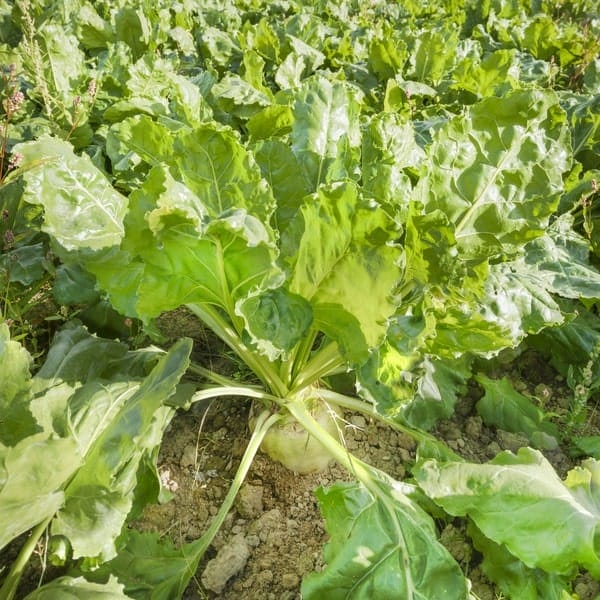
For example: production from EU sugar beet feedstock results in net land use reduction; co-product molasses & beet pulp displace other animal feed stuff derived from lower efficient agricultural land, such as wheat, corn, and soybeans.

Co-products from the sugar mill and DEB process can fulfill some demand for animal feed and starches with typically higher irrigation requirements—reducing actual water consumption. If the co-product is converted to ethanol, overall water consumption is positive, but still comparatively low.
Our goal is to be an important part of the circular economy, one in which products are made to be made again, and the process itself is responsible and restorative. DEB is our response, giving industries a viable alternative to fossil-based technologies.
The Designed Enzymatic Biomaterials technology platform represents over a decade of research and development. But this is just the beginning: DEB technology is how 21st century materials will be made.
Groundbreaking solutions like DEB will be an instrumental part of making the circular economy a reality.
As a unique business unlike any in the biotech industry, we welcome opportunities to discuss how the Designed Enzymatic Biomaterials technology platform represents a critical step forward, establishing a regenerative supply chain that doesn’t compromise on impact or performance.
* Depending on the industry and application-specific DEB based product formulation and certification requirements