

In this series
A Tale of Two Cities: Scaling Sustainability, we’ll get an inside glimpse into the innovative manufacturing practices at two very different IFF facilities, showing how sustainability is not a one-size-fits-all endeavor. We’ll explore how each location uniquely adapts its sustainability strategy to integrate with its local community, environment, available natural resources and regulatory framework.
From their proactive waste diversion programs to innovative water conservation initiatives, each site exemplifies how industry can indeed contribute to restorative ecosystems and lead the way for a more sustainable future.
As global companies race to meet ambitious emission targets, the Cedar Rapids site is an example of incremental progress on the ground today.
From upcycling waste streams to improving energy efficiency, the team applies consistent discipline to look for areas of improvement. And on the path to net zero, they’re showing how small, deliberate actions can add up to substantial collective impact.
One key to the plant’s success is the Green Team, a cross-functional group of employees who take ownership of the site’s environmental goals. Serving as the eyes and ears of the facility, they identify sustainability opportunities unique to their location and work together to make them a reality.

IFF’s Role
|
And recently, the Cedar Rapids team has introduced a new set of programs that redirect the waste from their enzyme production processes for use by local farmers to replenish their soil. |
These initiatives help contribute to the site’s goal of achieving zero-waste-to-landfill verification and align with IFF’s corporate goal of zero waste to landfill by 2030 |
Pioneering Sustainability
Focusing on sustainability has always been a return on investment. And we will continue to challenge the paradigms. What might not have worked last year could work in the next year or so.
The agricultural raw materials used for fermentation don’t get completely consumed in our process, and have inherent value. They come from the earth and we’re putting them back into the earth.
We have a formal approach to take smaller steps in these changes to mitigate any impact on the production performance or the quality of the final products.

Sustainability is truly embedded in everything we do. Through collaborative efforts and a steadfast commitment to sustainability, Cedar Rapids exemplifies how IFF is helping to build a more sustainable and equitable world.
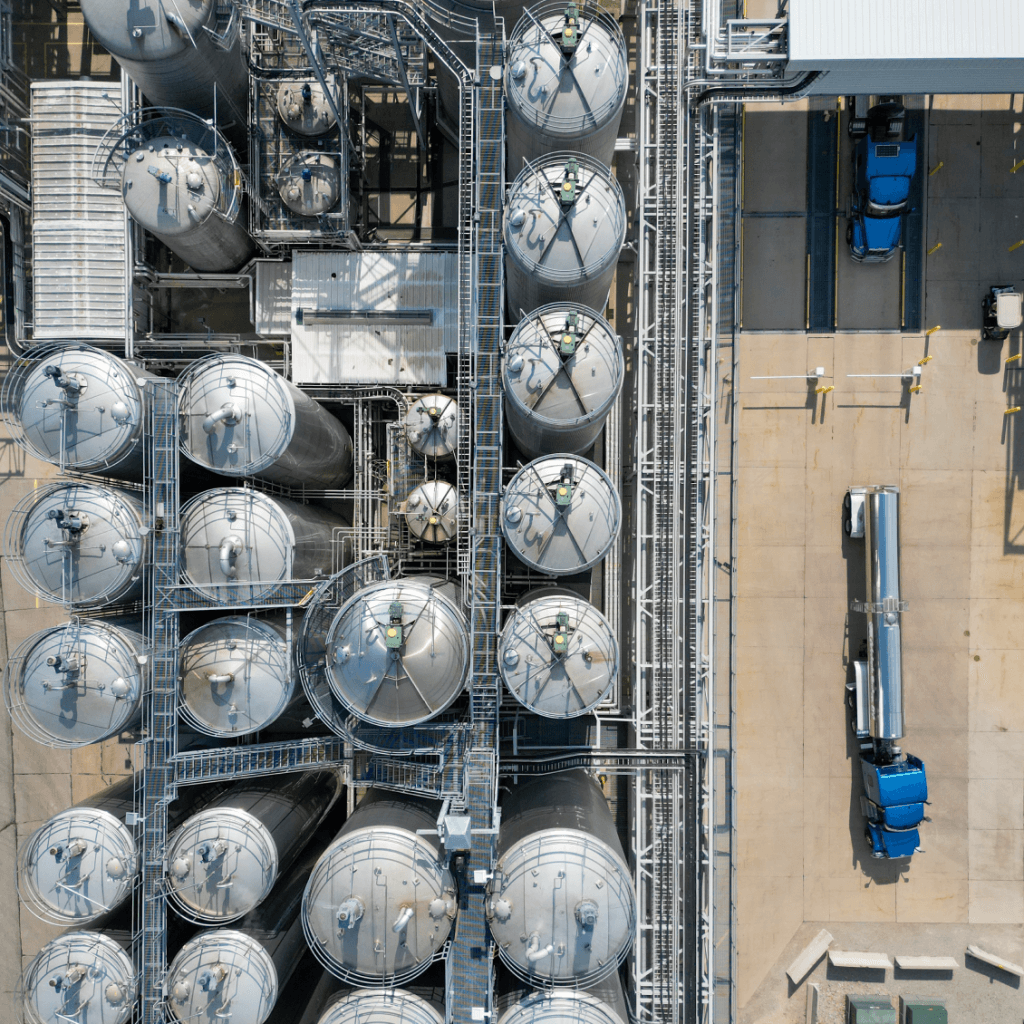
The site has two different waste streams that are reused by local farmers.
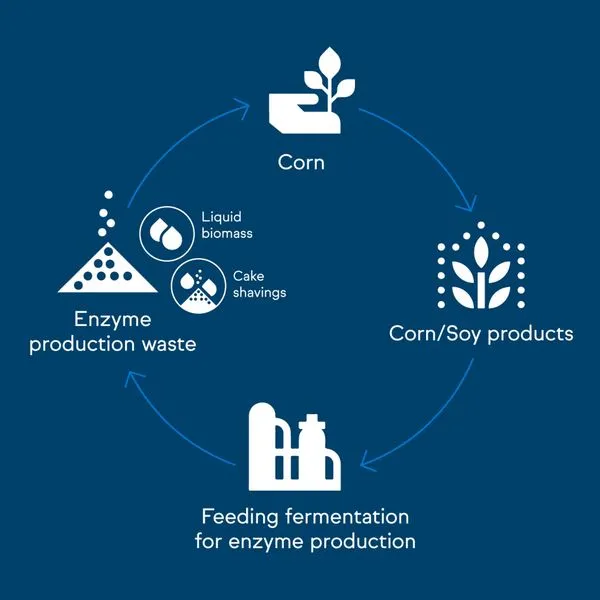
Biomass
A liquid byproduct from enzyme production that traditionally was sent to wastewater treatment plants, this material has been recognized by the Iowa Department of Agriculture and Land Stewardship as a soil conditioner that can be reused by farmers.
Impact
2.8 million gallons of liquid biomass a month are diverted to farmers to use as a soil conditioner that can enable less use of traditional fertilizer.
This results in an approximately 10% reduction in the site’s wastewater that would otherwise be sent to the city’s wastewater treatment plant and eventually the Cedar River.
Cake shavings
Diatomaceous earth, a powdery natural substance used as a filter aid in the enzyme production process, becomes a valuable byproduct post-filtration. It can be repurposed as a farming product to add moisture and nutrients back into the soil.
Impact
350 tons a month of cake shavings have been upcycled for agricultural use.
This represents 80% of this specific waste stream’s being kept out of local landfills.
Stepwise efficiency upgrades
| The Cedar Rapids team is continually seeking novel ways to improve energy efficiency across the plant’s operations. In the past several years, they’ve installed over 300 variable frequency drives on the site motors, which enables team members to adjust the speed and power of their equipment based on real-time demand. This yields significant savings, especially with energy-intensive equipment like the agitator mixers used in the fermentation process. They’ve also switched to energy-efficient LED lights throughout the facility — resulting in approximately 490,000 kW/hr of energy savings. | The key to implementing many of these upgrades is to take an incremental approach while considering the end-to-end production system, says Damian Long, Technology Manager. In the agitator mixer upgrade, for example, they gradually reduced the agitation setpoint by 5% in each subsequent fermentation until they begin to encounter mass/heat transfer limitations. |
Sustainable Steam Generation with Hybrid-Electric Boilers
Looking to the future, they’re working on an investment proposal for a hybrid-electric boiler for steam production that would cut their use of fossil fuels. The electro-boiler can be heated by surplus renewable solar and wind energy from the grid. And since steam generation is such a critical part of many of their production processes, there’s significant potential for carbon-emission reductions with this new boiler.
The new steam generation facility can save up to 20,000 MT of CO2 a year.
-
Over 20%of total CO2 emissions
Cold-water-wash challenge
The R&D and manufacturing teams also invest and collaborate to update their enzyme strains to yield more product with less inputs. For example, one of their new enzymes used in cold-water laundry detergents has undergone several rounds of strain and process improvements, resulting in a significant increase in yield.
Enzyme Innovations in Action
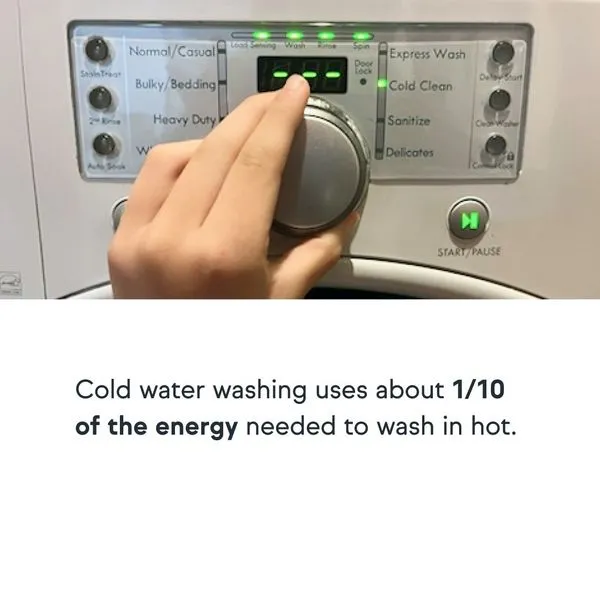
Building on the site’s commitment to environmental stewardship, the team recently put its enzyme innovations into practice, inviting employees and their families to participate in a “Cold Water Wash Challenge.”
Removing Roadblocks
| Empowering Communities Through Tree Planting and Stewardship Education
In 2020, Cedar Rapids was hit by one of the most powerful windstorms in U.S. history; 70% of its trees were destroyed. |
In a program led by the Green Team, the site partnered with the city on a three-year initiative to donate and replant thousands of trees, targeting low-income areas most in need. And as part of this community program, employees received education on tree planting and land stewardship. |


The Green Team continues to drive the facility’s sustainable efforts through an approach that empowers and engages employees to develop on-the-ground solutions. After initiating the waste diversion (cake shavings) program, they’re leading plans to find new homes for the site’s other waste streams, getting them closer to their zero-waste-to-landfill certification.
“We love getting input from our Green Team, because they have the knowledge and expertise to help see our plans to a conclusion,” says Fersdahl. “And as we continue on this journey, their mix of idea generation and removing roadblocks will propel us forward.”
The Cedar Rapids site showcases IFF’s commitment to leveraging science and creativity to do more good for people and the planet.