




Amino Acids
Every protein including enzymes is made up of a long chain of amino acids— like a string of beads.


The consensus was that enzymes pulled from nature couldn’t be improved upon.
“The belief was that you’re sort of stuck with what nature makes, and that was it,”
says Dave Estell, a founding Genencor scientist, fellow, and laureate at IFF today.
“There was no way to make it any better, and if you could do it, you couldn’t do it at a reasonable cost at industrial scale.”

In the 1970s and 80s, the San Francisco Bay area was the fertile crescent of modern biotechnology. Genencor, founded in Palo Alto as a partnership between Genentech and Corning, was the first biotech company to apply these cutting-edge technologies to industrial enzyme production.
But the team of pioneering scientists proved them wrong. The techniques and processes they developed enabled the first successful commercialization of a protein-engineered laundry detergent enzyme, laying the groundwork for a whole new category of biotech products.
Today, these experts, who are now a part of IFF, continue to lead this bio-revolution. By harnessing the power of enzymes—an abundant natural material—IFF’s scientists are innovating to develop and manufacture complex, sustainable ingredients. These solutions not only reduce our dependence on fossil fuels, but also deliver exceptional performance.
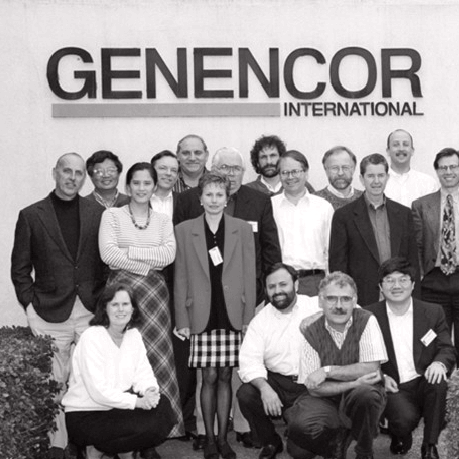
Photo below: the early lab team who developed the first protease for laundry detergents
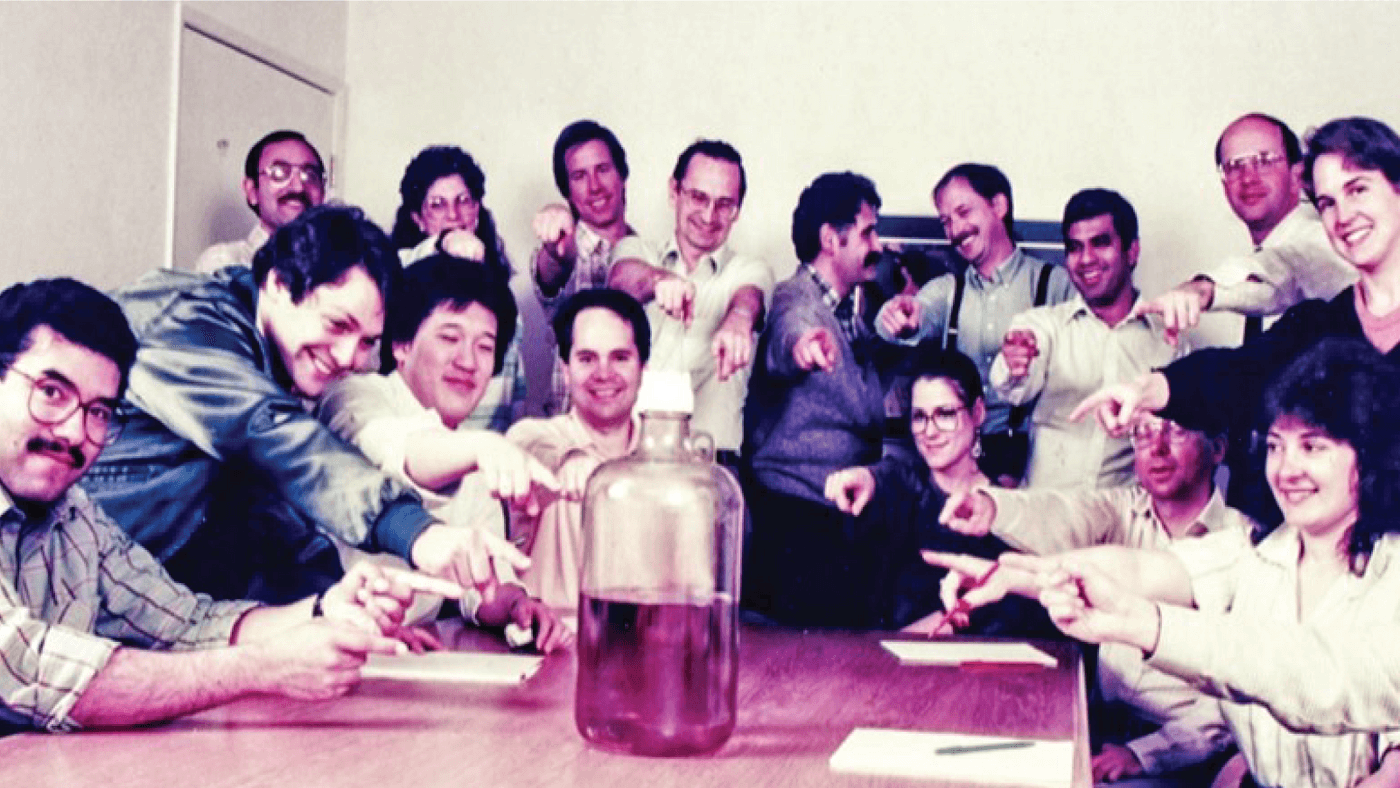
Genencor’s scientists got their first opportunity to showcase their protein engineering expertise in 1983, when Procter & Gamble approached them about needing a better protease (an enzyme that breaks down protein-based stains) for its liquid formula. Enzymes in their natural form had already been used in granular detergent formulas for some time, but when added to liquid formulas, they’d become unstable, quickly degrading and losing their catalytic activity.
To engineer a better protease, Genencor’s scientists set out to tweak the protein’s structure to improve its function.
Every protein including enzymes is made up of a long chain of amino acids— like a string of beads.
By changing its amino acid sequence—or the order of beads on the string—scientists can alter the shape and function of the enzyme to deliver desired properties for laundry detergent applications.
After months of iterative testing, scientists landed on the precise single genetic mutation that would change the protease’s amino acid sequence to make it more stable and more active. This groundbreaking discovery enabled enzymes to be used in liquid laundry formulas for the first time—dramatically enhancing cleaning performance in products like a best-in-class detergent trusted by millions worldwide.
And most recently, in 2021, IFF acquired DuPont’s Nutrition & Biosciences division, expanding the enzyme experts’ global footprint and capabilities.
With each successive company change, the enzyme leaders have continued to build upon this collective knowledge in their tools, host organisms, and scientific expertise.
Enzyme development is a complex and costly process. Translating an optimized protein developed in a lab into a commercial product requires many layers of expertise. And unlike smaller companies, which often specialize in one approach, IFF has a diversity of biotech tools to draw from to select the best strategy to tackle a challenge.
In recent years, major technological advances from high-throughput screening to AI and CRISPR/Cas9 have made enzyme development faster and resulted in more effective products. But human talent is still the “secret ingredient” required to unlock the potential of these technologies.
To that end, IFF has built consensus-driven, fully integrated teams, bringing together experts in high-tech computing, analytical chemistry, molecular biology, and industrial production.
At the core of IFF’s approach to enzyme engineering today is a powerful technique known as directed evolution. This Nobel Prize-winning technique helps guide biology to create enzymes that have desired properties, such as cleaning at colder temperatures or targeting specific stains.
To start any project, IFF’s scientists select a natural enzyme from their extensive library. Then, using advanced high-throughput screening tools, they can screen thousands of variants at a time to narrow down the finalists that will go on for further testing and development.
But before screening can even begin, the most critical step is to develop the right set of assays, or screening tests, that can efficiently identify the new enzyme candidate.
Inside each well is an enzyme variant mixed with detergent, and a swatch of cloth with a specific stain. The scientists can track these experiments in real time thanks to end-to-end databases and barcoding technology.
“We have the benefit of seeing data popping up in real time. And trying to pick out which mutations in these variations are beneficial or not,” adds Pricelius. Scientists can spend up to six months iteratively testing and refining enzyme candidates in order to identify the winning candidate.
In parallel to these lab experiments, IFF’s scientists are also using AI to further push the boundaries of enzyme development. Similar to consumer tools like ChatGPT that use data from written language to generate text, these AI models are trained on data obtained from proteins to predict enzyme activity. These tools can propose thousands of new enzyme variants that IFF scientists may not have found using traditional screening and selection methods.
As signs of global warming only increase each year, and consumers, regulators, and other stakeholders demand more sustainable products, IFF is uniquely suited to meet this critical moment. With over 40 years of experience in industrial biotech, IFF has the unique capabilities to lead us to safer and more sustainable innovation.
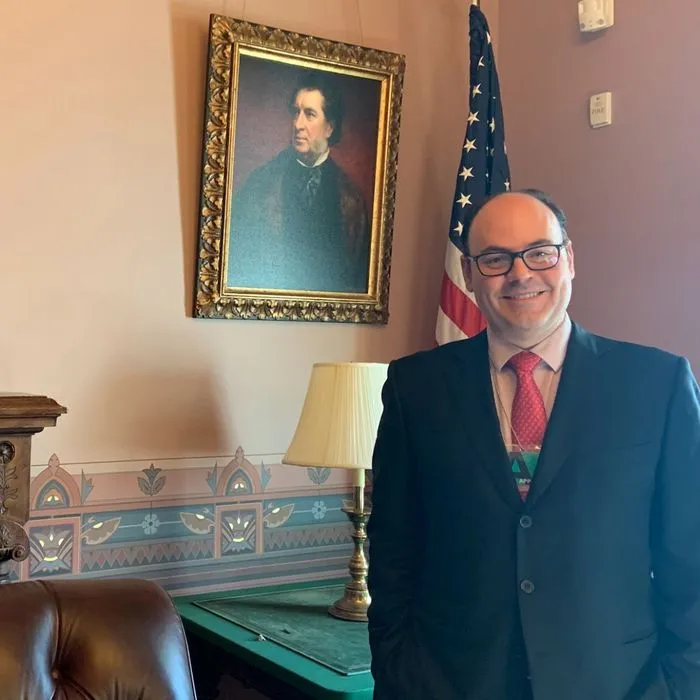
In September 2023, Former President Biden issued an executive order to accelerate biotechnology innovation. As a part of these ongoing efforts, IFF’s Luis Cascão Pereira, Global R&D Ventures Lead, was invited to a White House session to share his perspective on using biomanufacturing to strengthen the U.S. supply chain. “I was able to make solid recommendations based on real-world experience that I’ve gained over the course of my career in biosciences,” says Pereira.
Following the event, Pereira was also asked to consult on developing policy frameworks related to these new initiatives.
For IFF scientists, optimized enzymes for laundry and dish detergents are just the start of our bio-based future. “We’re just at the very, very beginning,” says Redestig.
Subscribe now to keep receiving the latest consumer insights, industry news, product offerings and more from the Fabric and Home Care team at IFF.