


Saccharification & Fermentation
Improve yield and consistency while maximizing output with our high-performing saccharification and fermentation products.
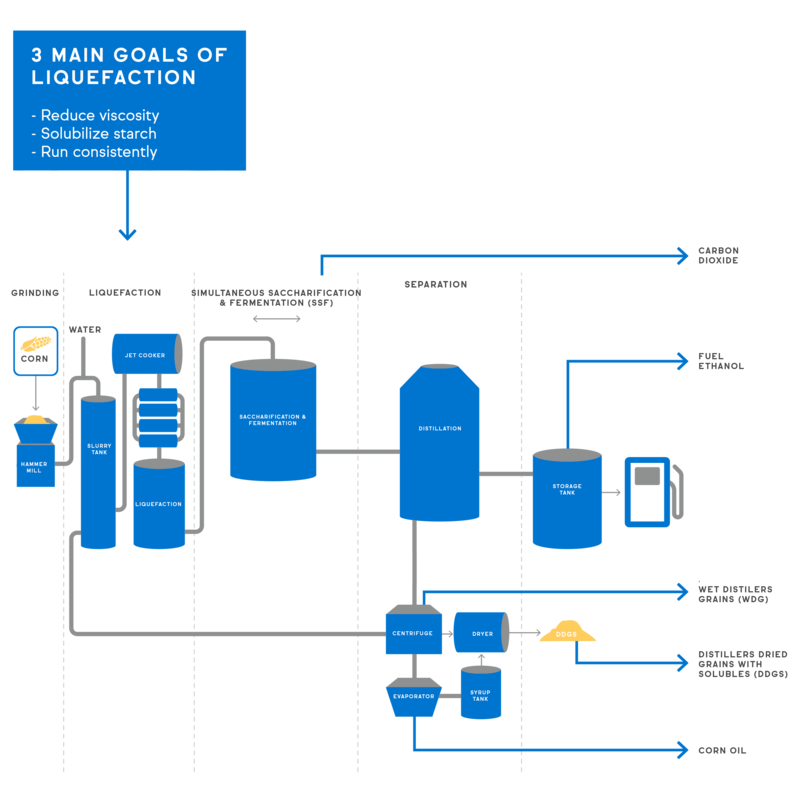
Liquefaction is a critical step in the ethanol process setting the stage for the fermentation and downstream steps that follow. The ground grain from the milling process is mixed with recycled liquids and/or fresh water to make a slurry/mash. As the mash is heated to increase the amount of available soluble starch, the starch granules absorb water and swell resulting in maximum viscosity (gelatinization) leaching out amylose and amylopectin.
| Alpha-amylase, a starch degrading enzyme precisely targets the amylose and amylopectin breaking down the starch into shorter chains called dextrins (dextrinization). | The success of the liquefaction step is dependent on the dynamic and complex interactions of a variety of conditions that must be well understood and monitored closely. |
| From the enzymes in our bodies that help break down food to the enzymes found in an ethanol plant that help break down starch, enzymes are natural compounds that help make reactions occur in everyday life. | All living organisms produce enzymes but enzymes themselves are not alive. As biocatalysts, enzymes reduce the activation energy required and help speed up a specific chemical reaction. |
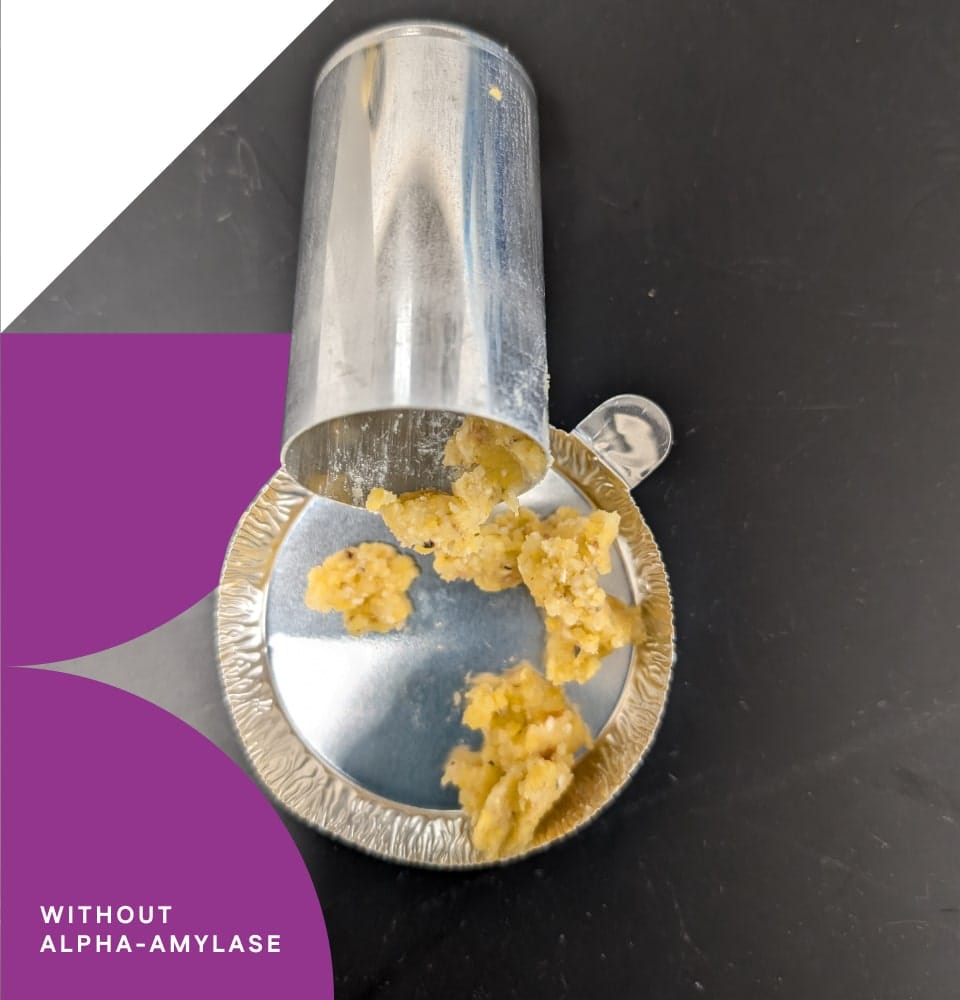
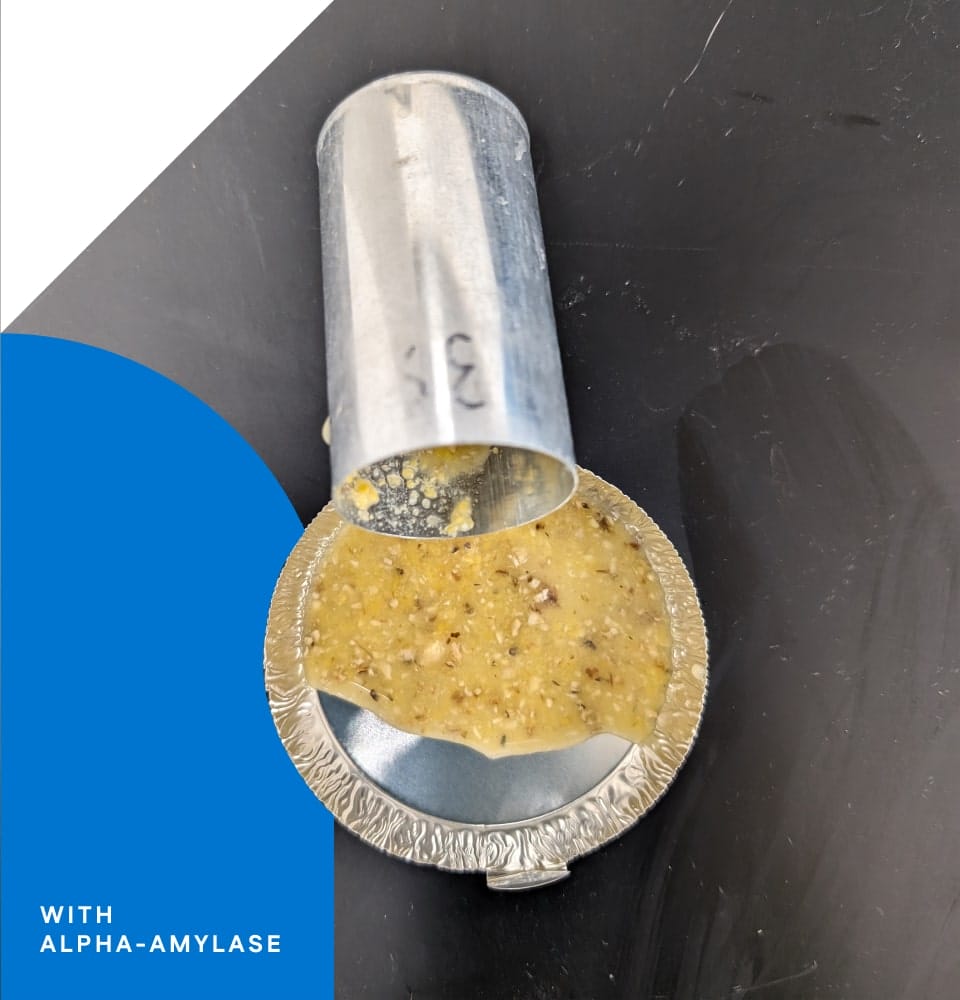
Alpha-amylases are the primary enzyme used in the liquefaction step to break down starch into shorter glucose chains called dextrins. Improper enzyme dosing can lead to a variety of problems such as increased viscosity causing the liquefact to be too thick which can result in high pressure and pumping issues.
Proteases hydrolyze protein matrices in the corn kernel that bind the various corn fractions enabling hydrolysis of “hard” to hydrolyze starch and increases the levels of essential yeast nutrients in the form of amino acids and small peptides (short chains of amino acids). Proteases may provide many benefits, including faster ethanol rates and higher yields, enhanced yeast performance, and improved oil recovery.
Phytases hydrolyze phytic acid to enhance the pH and temperature stability of the alpha-amylase and reduce free phytate levels in residuals such as DDGS. Phytic acid, the principal storage form of phosphorous in grains, is a complex molecule that can chelate enzyme-protecting ions and bind proteins and starch-protein complexes, resulting in reduced alpha-amylase activity and poor liquefaction performance.
Xylanases hydrolyze the arabinoxylans in the corn fiber making previously unavailable starch accessible. Alpha-amylases can now act on this starch and allow it to be converted to fermentable sugars.

Check with your IFF rep for the best solutions available for your region.
Improve yield and consistency while maximizing output with our high-performing saccharification and fermentation products.
Additives that improve operational efficiency and move your business forward by accelerating fermentation and increasing yields.
Whatever your end-goal, unlock better biofuel production through yeast fermentation with our diverse portfolio of yeasts and yeast blends.
Our wide range of technical services help optimize production and unearth new opportunities, to drive commercial success.