




Our team of IFF experts was recently at the Appliance & Electronics World Expo in Shanghai, the Consumer Electronics Show in Las Vegas, and IFA in Berlin getting a first look at the cutting-edge appliances showcased in each region. In this issue, we’ll unpack what these advancements mean for fabric care leaders and how they can open opportunities in your own product development.
Be sure to subscribe for the latest Home Care insights sent straight to your inbox.
“Monitoring appliance innovation can give you a glimpse into the future to see how your products may need to evolve.
These insights can also be applied to your current product portfolio to leverage similar consumer claims and messaging,
says Tatiana Goncharova,
Global Business Segment Leader at IFF.
The smart home ecosystem
| AI isn’t new to our homes (think Alexa), but with advances in more powerful generative AI technology, appliance brands have unveiled a new crop of adaptive, interactive products — from smart refrigerators that tell you when your tomatoes are about to spoil to dishwashers that can self-diagnose mechanical issues and even schedule a service appointment for you. | In this AI-enabled future, many of the major brands are promoting their individual products as part of an integrated smart home ecosystem. If their vision becomes a reality, all your household appliances will be connected to one another and the internet, constantly sharing data and optimizing to create a personalized home environment. |
Sinner’s circle
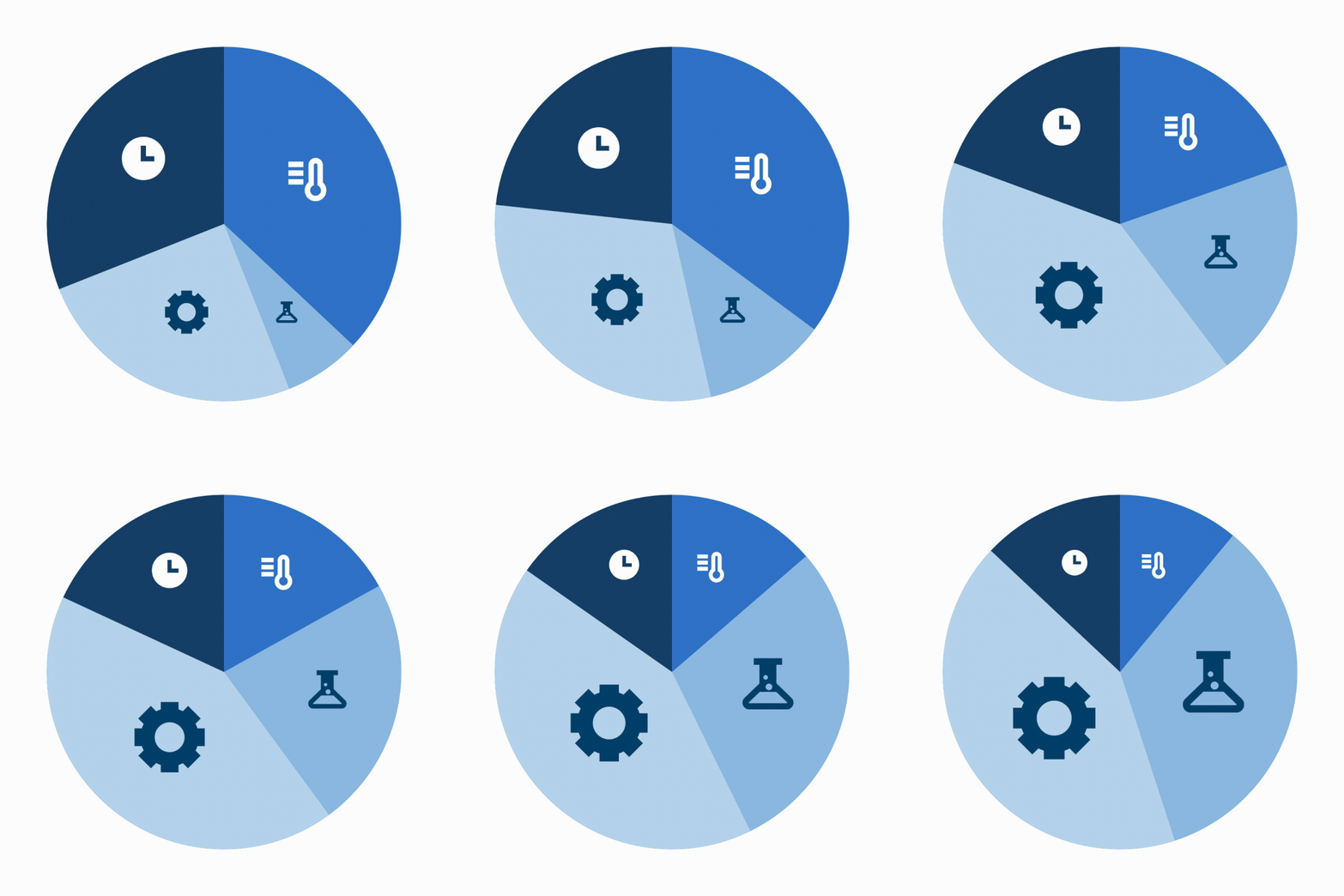
The four interconnected factors for effective cleaning: time, temperature, chemistry and mechanical action.
But as a formulator, ingredient supplier or other stakeholder in the detergent value chain, you may be wondering what all these high-tech add-ons mean for your product development in the near and long term.
This is where Sinner’s circle comes into play. First devised in 1959 by chemist Herbert Sinner, this concept shows the four interconnected factors that determine cleaning effectiveness: mechanical action, time, temperature and chemistry. Detergent brands and ingredient suppliers determine the chemistry by creating cleaning agents or additives such as enzymes, fabric softeners and scent boosters. And if one part of the circle is changed, then the other factors need to be adapted.
As machine upgrades continue to shift the dynamics of Sinner’s circle, it’s important to stay on top of emerging technologies. Join us as we explore the latest appliance advancements from the 2024 industry shows and how they’ll impact the future of the laundry care ecosystem.
AI Sensors
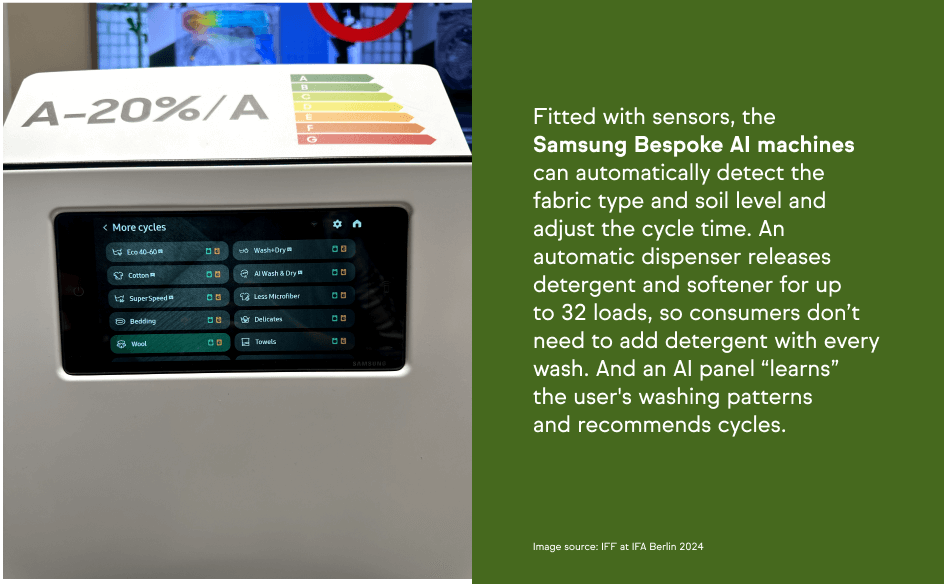
Leading brands, from Bosch to Siemens to Samsung and Haier, have introduced next-generation AI-powered machines designed to take the “thinking” out of doing laundry. “These features are mainly about convenience,” says Lynn Meng, Asia Pacific Business Segment Leader at IFF. “Chinese consumers want to save time and achieve first-time clean when doing their laundry.”
In North America and Europe, some brands are marketing their AI-enabled machines with sustainability and personalization claims. But according to Meng, sustainability is not as relevant to consumers in China. This is because washing at more eco-friendly ambient temperatures is already a standard practice there.


The Laundry Lens
| We know that consumers tend to use more detergent than necessary, and these latest AI enhancements reduce this waste by selecting the precise amount of detergent and water needed for each load. But as the machine takes over the decision-making, cycles may become shorter and use less water and detergent. This ultimately will have an impact on the balance of Sinner’s circle. | To close this gap in cleaning power, detergent formulators can use this as an opportunity to leverage next-generation enzymes. IFF’s PREFERENZ® liquid laundry enzymes are engineered for outstanding cleaning performance at all cycles, including cold-water washes at 30° C and lower.
|
“A market that once relied on longer and warmer washes is using the
catalytic power of enzymes to help deal with shorter wash cycle time and lower temperatures,”
Marvanne DeClerck, Regional Commercial Director at IFF, based in Rochester, NY.

| Auto-dosing machines could also have a significant impact on the future of detergent formats. Laundry pods are currently the fastest-growing format, but if auto-dosing machines become more mainstream, they may increase the demand for premium liquid detergents that fit a variety of specifications for these new machines. | “Detergents will need to adapt to work within these smart-laundry systems to achieve accurate and efficient washing,” says Xu. “For example, formulators may need to add features for special stain removal and have lower viscosity so the machine can automatically dose the detergent into the washers.” |
The Impact of Auto-Dosing Laundry Machines on Detergent Formulation


Laundry Care Solutions
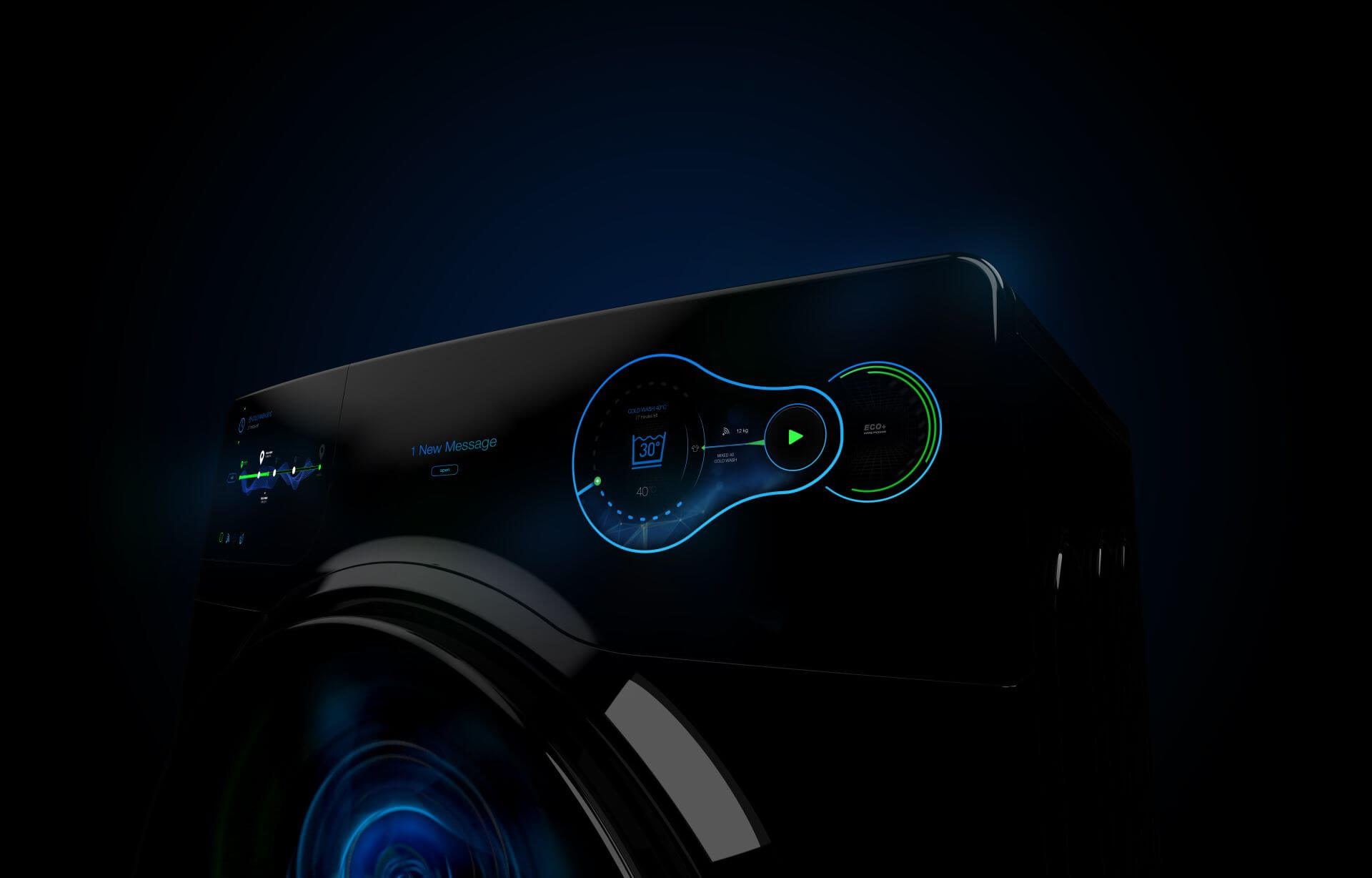
From steam closets to an award-winning laundry machine designed by the same team behind the Porsche 911, we observed a variety of innovative laundry solutions targeting high-end consumers. Many of these devices claim to use cutting-edge technology to refresh and sanitize clothing between dry cleaning and washing cycles, saving time and money and extending the life of garments.


The Laundry Lens
Stain removal is still the top concern among consumers, but these new cleaning aids show that there is growing demand for additional benefits. This presents an opportunity for detergent manufacturers to differentiate themselves by developing innovative formulations to meet these specific consumer needs. “Some machine innovations and features are making fairly standard laundry detergent performance claims such as malodor removal, disinfection and fabric care. We expect detergent manufacturers will continue efforts to address these consumer needs through their formulation design as well,” says DeClerck.
“I would estimate that less than 1% of consumers currently have these high-tech laundry machines.”
says Lynn Meng,
Asia Pacific Business Segment Leader at IFF at IFF.

Future Collaboration
The future of the laundry industry lies in a collaborative approach between machine designers and detergent makers as they work together to understand and meet consumer needs.
Appliance manufacturers are not only creating their own detergents but also collaborating with major brands like P&G, Henkel, and Unilever to drive innovation and progress. This cross-industry collaboration is essential to ensure that we can collectively address consumer needs and advance innovation.
As we’ve seen, innovations in appliances could potentially shape detergent formats in the future —shifting from unit doses to liquid. In our next issue, we’ll take a deeper dive into formats, from laundry sheets to custom formulations.